Garden Planning
How to Keep a Garden Journal (That You'll Actually Keep)
Mea Cara · September 1, 2026 · 4 min read
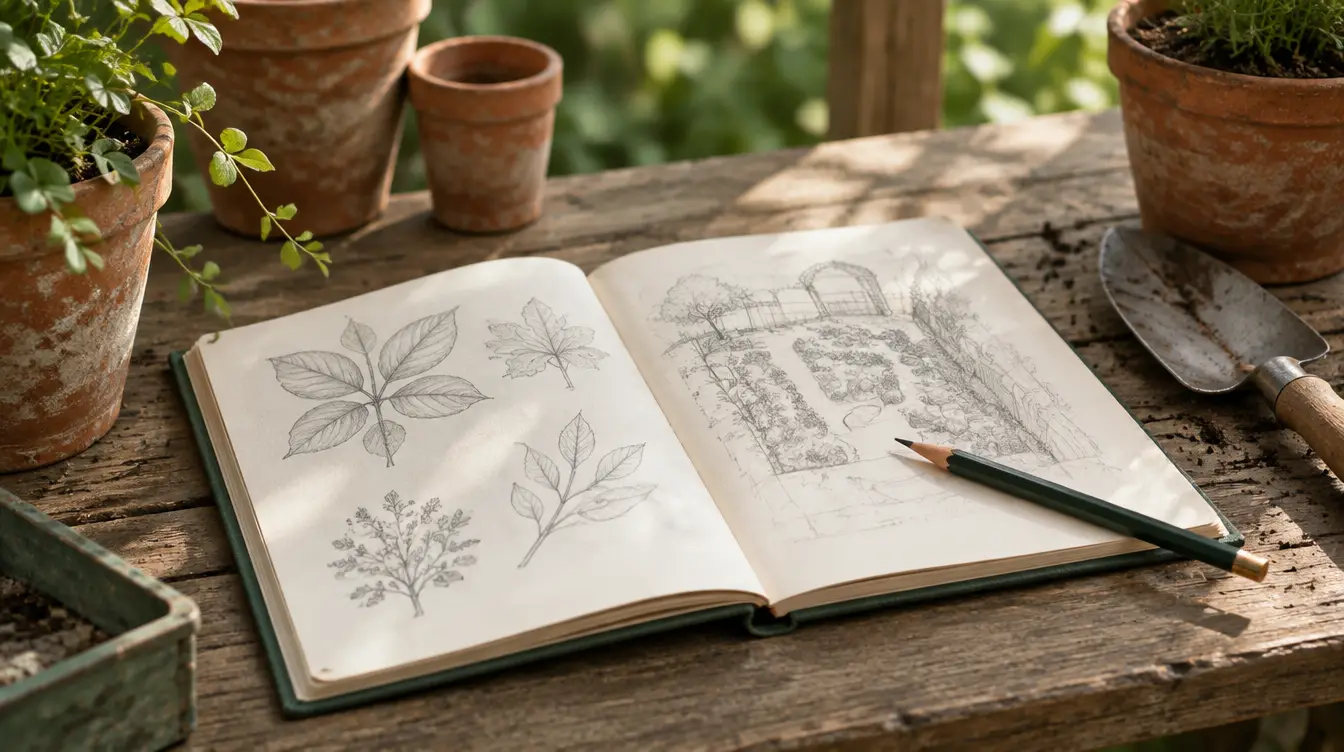
Almost every garden journal is started in April. Enthusiasm is high, the first tomato seedling has real leaves, and the notebook gets three beautiful entries. By late June — when the garden is finally generating information worth keeping — the notebook is under a bag of potting mix on the porch.
The problem isn't discipline. It's that most journals ask for the wrong things at the wrong moment.
What a garden journal is actually for
Not sentiment, though that's a lovely side effect. A journal exists to answer next year's questions with this year's evidence: When did the last frost really hit? Which tomato actually produced? How long did that bed stay soggy after rain? Gardening is an annual loop with a twelve-month feedback delay. Memory cannot hold that. Notes can.
The six things worth recording
- Dates. Sown, transplanted, first bloom, first harvest, last harvest, first frost. Dates are the highest-value thing in the whole journal and take four seconds each.
- Varieties, exactly. Not "the cherry tomato" — Sun Gold, from which packet, bought where. Next February you will be choosing between eleven near-identical options.
- Photos. The same bed from the same corner, once a month. A year of those tells you more about your garden than anything you could write about it.
- Weather that mattered. Not the daily temperature — the hailstorm, the three-week drought, the freak May frost that explains why everything looked terrible in June.
- Failures, with a guess. "Squash collapsed mid-July — vine borers?" A wrong guess still narrows next year's search.
- What you spent. Seed, soil, plants, that impulse shrub. Nobody enjoys this one and everybody wants the number eventually.
What to skip
Daily entries. Weather logs you'll never re-read. Anything that requires sitting at a desk. A journal that demands a ritual gets abandoned the first week the garden is busy — which is exactly the week worth recording.
Capture in the garden, organize later
The single change that makes journals survive: record where you're standing, in whatever form is fastest. A photo with two words attached beats the paragraph you meant to write after dinner. Muddy hands are the normal condition of the person with something to record.
This is where paper struggles. It's never in the garden, it can't hold photos, and it can't be searched in February. The notebook-versus-app tradeoff is real in both directions and worth thinking through honestly rather than assuming digital wins.
Where the journal pays off
Three places, all of them next season. Seed-starting timing stops being a guess once you have two years of your own frost dates instead of the average for your zip code. Your garden calendar shifts from generic advice to your own yard's rhythm. And plant-by-plant history — this rose, in this spot, pruned this way, bloomed like this — is the one thing no gardening book can give you.
If you want the journal to do more than sit there
A journal that only accumulates entries is a diary. What makes it useful is connection: an entry that belongs to a plant, so the plant builds a history; a photo that lands in a season's story; a harvest note that rolls up into a year's total. That's the reason GardenBinder exists — entries link to plants and beds, every photo is kept and stamped with who added it, and the app notices things on its own: first blooms, anniversaries, a season recap told in your own pictures. Free to start, and phone-first on purpose: a couple of taps, in the garden, with dirt on your hands.
Start with one entry today, even a bad one. The garden is going to generate the information either way — the only question is whether any of it is still around next March.
#garden journal #record keeping #getting started