Garden Planning
Garden Notebook vs. App: The Honest Comparison
Mea Cara · September 15, 2026 · 4 min read
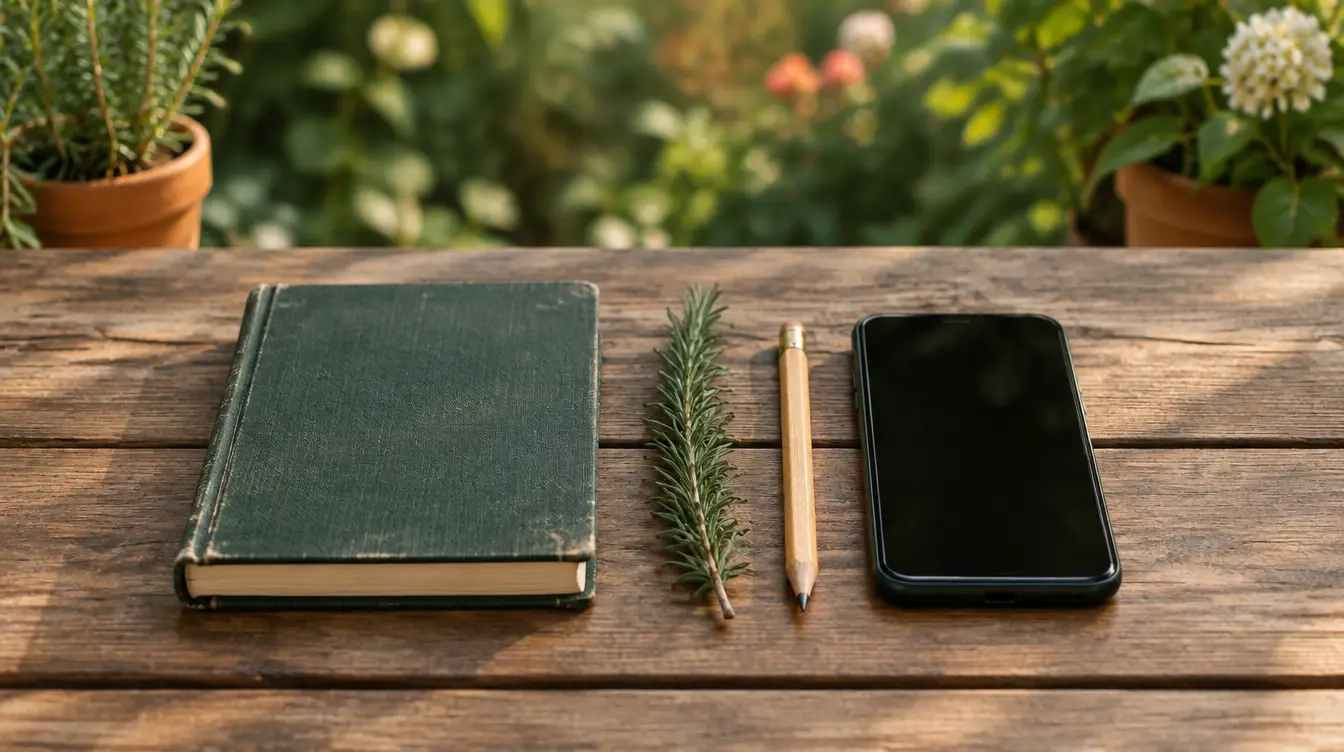
Every recommendation on this subject is made by someone selling one of the two options. So, plainly: a paper garden notebook is a genuinely good tool, and for some gardeners it is the right one. Here is what each side actually wins.
What the notebook wins
- It costs nothing and expires never. No subscription, no account, no company that might fold in 2031 and take your fifteen years of records with it.
- Zero friction to write. No unlock, no loading, no login. A pencil works in the rain and in gloves.
- Sketching. Bed layouts, a rough map of where the bulbs went, an arrow and a question mark. Drawing on paper is still faster than any interface.
- It's pleasant. This is not a small thing. A record you enjoy keeping is a record you keep.
What the app wins
- Photos, at volume. The most valuable garden record is visual, and paper simply cannot hold it. A phone can hold ten years of the same bed in June.
- Search. "When did I last feed the roses?" is instant in one and an archaeology project in the other.
- It's with you. At the nursery, deciding whether you already own this hosta. Standing in the garden at 7am. The notebook is on the kitchen table.
- Reminders that arrive. A notebook can hold the schedule but it cannot tell you the window opened this week.
- Arithmetic. Germination rates, harvest totals, what the season cost. Real work by hand; automatic once the entries exist.
- It survives a house fire and a flood. Paper doesn't.
The real failure modes
Notebooks fail by filling and stopping. Volume one is beautiful, volume two is half done, volume three was never bought. And they fail by being illegible or lost — a decade of notes in a box in the garage is not a record you consult.
Apps fail by friction and abandonment. If logging an entry takes eleven taps and three required fields, you will do it in April and not in July. And they fail by lock-in: if you can't get your data out, you don't really own it.
Both failure modes are about the same thing — the moment of capture. Whichever tool is fastest at the moment you have something to record is the one that ends up holding your garden's history.
The compromise most people land on
Paper for planning, digital for recording. A sketchbook or graph paper for bed layouts in February, and the phone for everything that happens once the season starts — because that's when photos matter and desks don't exist.
If you go digital, three things to check
- How fast is a photo-plus-note? Time it. If it's more than a few taps, you won't do it in August.
- Can you export everything? A real export — your records in a plain, readable format, and your photos as ordinary image files, not a proprietary archive.
- Does it work offline? The far corner of a yard is a surprisingly common dead zone.
GardenBinder was built with those three as requirements: the + button captures a journal entry or a plant in a couple of taps, it installs to your phone's home screen and reads offline, and Settings → Your Data downloads the whole binder any time — every record as plain JSON, every photo and document as normal files. No lock-in and no asking permission. It's one of several reasonable options, and the comparison there is deliberately honest about who each one suits.
But the actual advice is simpler than the comparison: pick whichever one you'll still be using in September, and start this week. A half-kept record of this season beats a perfect system you adopt next year.
#garden journal #notebook #apps