Seed Starting
When to Start Seeds Indoors (Count Backwards From Your Last Frost)
Mea Cara · September 1, 2026 · 4 min read
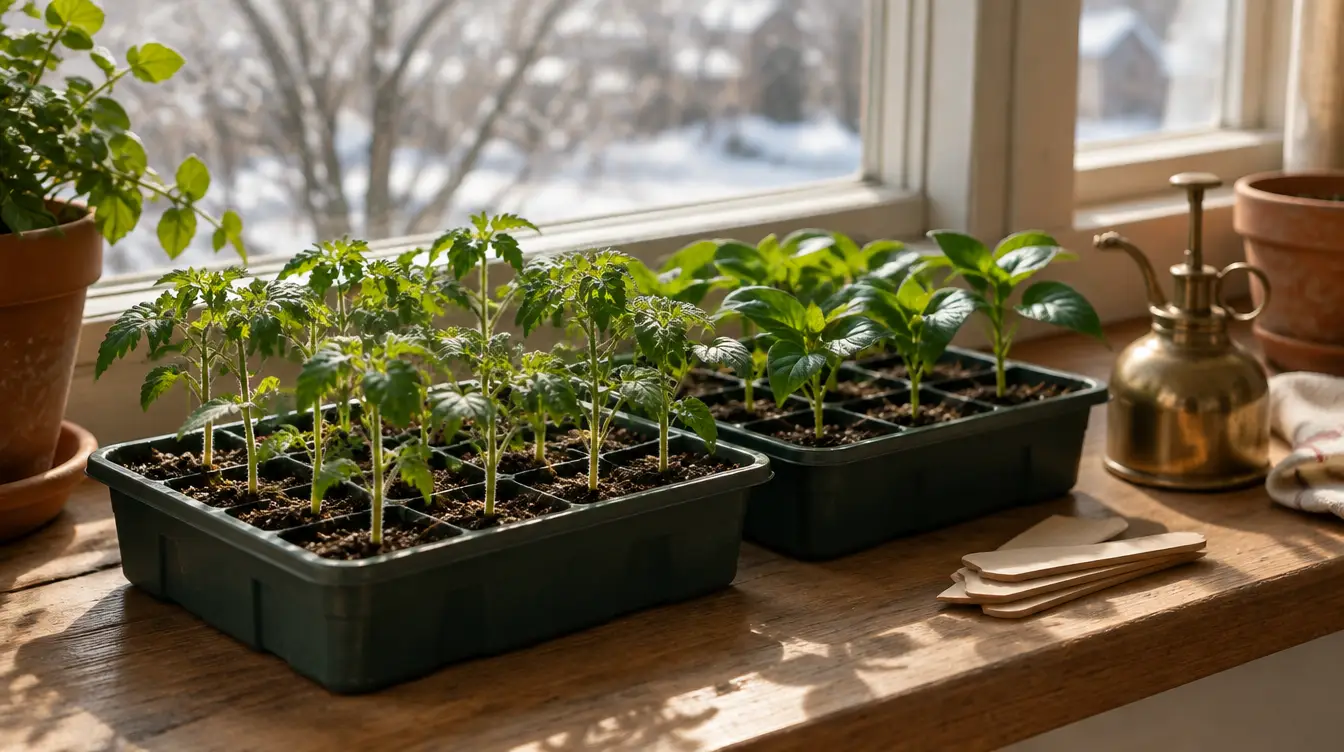
Every seed packet says the same thing: start indoors 6–8 weeks before your last frost date. Not one of them tells you when your last frost date is, and the sources that do are averages built from a weather station that may be forty miles and three hundred feet of elevation from your garden.
Here's the arithmetic, and the two places it usually goes wrong.
Step one: find your last frost date
You want the average date of the last spring frost for your location — most gardeners use the 50% date, meaning in half of years the last frost falls after it. Look it up once, write it down, and treat it as a starting hypothesis rather than a fact. Then correct it with your own observations: a low spot, a north slope, or a dense city block will each run days or weeks off the regional number.
Two years of your own recorded frost dates beats any published average. It's the least glamorous and most valuable thing a garden journal does.
Step two: count backwards
Take the packet's "start indoors" window and subtract it from the frost date. That's your sowing date. A rough guide for common crops:
- 10–12 weeks before: onions, leeks, celery.
- 8–10 weeks before: peppers, eggplant, parsley.
- 6–8 weeks before: tomatoes, basil — basil at the short end.
- 4–6 weeks before: brassicas, lettuce, chard.
- 2–4 weeks before: cucumbers, squash, melons — fast growers that resent sitting in a cell tray.
- Don't start indoors at all: carrots, beets, radishes, beans, most roots. Direct-sow them and skip the transplant shock.
The mistake almost everyone makes
Starting too early. An eight-week tomato is a sturdy transplant; a fourteen-week tomato is a leggy, root-bound thing flowering in a cell tray that a direct-sown seedling will overtake by July. And if the weather doesn't cooperate you can't put it out — the seedling doesn't wait for you.
The second mistake is forgetting to harden off. Leave 7–10 days between "ready" and "in the ground", or you'll cook a month of work in one afternoon of real sunlight.
Seeds that need chilling first
Many perennials, natives, and tree seeds need weeks of cold and damp before they'll germinate at all — cold stratification. The chilling has to end when the sowing window opens, which means counting backwards twice: sowing date minus chill days is the date the packet goes into the fridge. Miss it and the seeds simply sit there looking inert while you wonder what you did wrong.
Write the schedule down in December
The whole thing is knowable in winter and completely unmanageable in March, when six crops want sowing in three different weeks and the packets are in a shoebox. Work it out once and the season runs itself.
Winter is also when you find out what you already own — including anything you saved from last year's garden, which costs nothing and is usually better adapted to your yard than what you'd buy.
Or let the arithmetic happen for you. GardenBinder builds the sowing calendar from your frost dates and each packet's own numbers — start-indoors weeks, chill days, depth, spacing, days to maturity — so a tomato marked "6 weeks" appears six weeks out and a stratified packet gets a fridge date of its own. Snap the packet and Premium reads those numbers off it. Every tray then tracks from sown to germinated to potted up, hardened off and transplanted, with germination rates and an estimated harvest date along the way.
However you keep it, the principle holds: the frost date is the anchor, everything counts backwards from it, and the seedling you start too early is the one that lets you down.
#seed starting #frost dates #timing