Seed Starting
How to Save Seeds From Your Own Garden
Mea Cara · September 8, 2026 · 4 min read
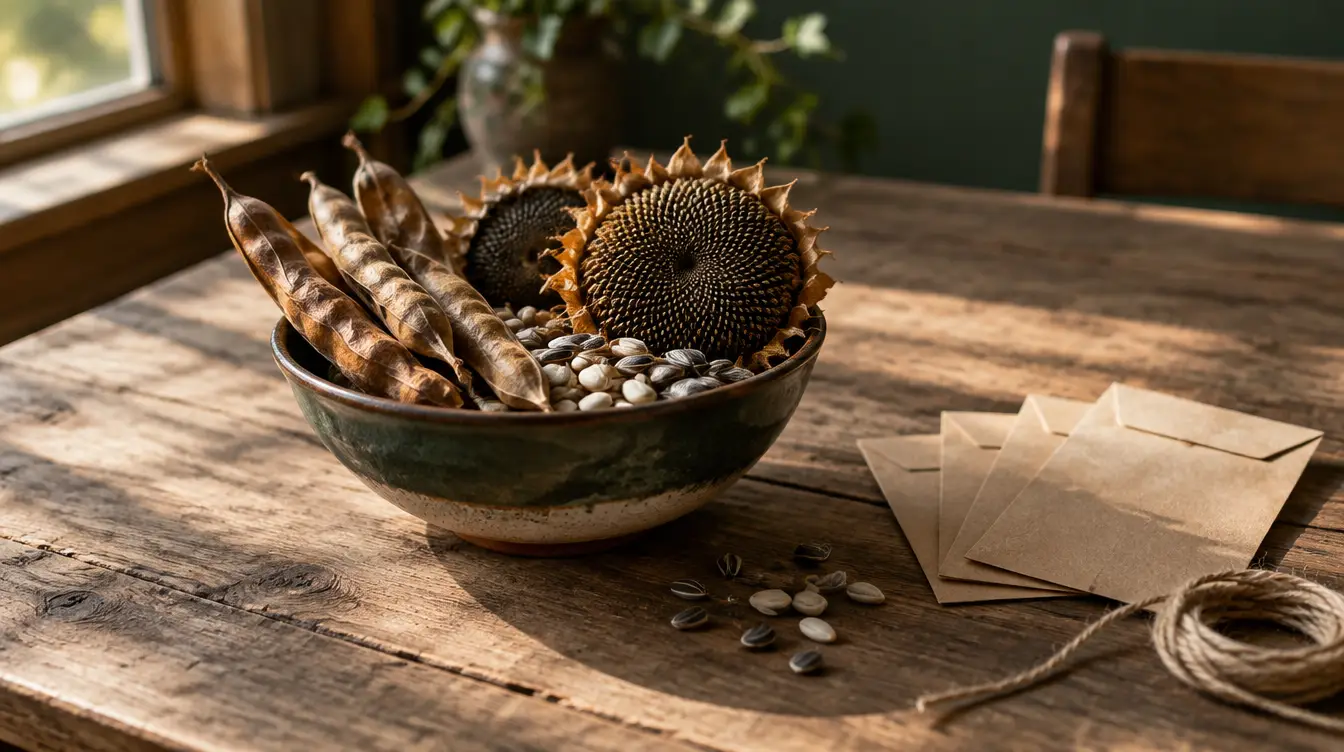
Seed saving has an unearned reputation for difficulty. Some of it is genuinely fiddly — anything in the squash family will cross with its neighbors and hand you a surprise. But a good half of the vegetable garden saves itself with almost no intervention, and the seed is free, adapted to your yard, and better every year you do it.
Start with the easy ones
Self-pollinating annuals rarely cross, so what you save is what you planted:
- Beans and peas. Leave the pods on the plant until dry and rattling. Shell them, dry another week indoors, store.
- Tomatoes. Squeeze the seeds and gel into a jar with a splash of water and leave it two to four days, until it looks unforgivable. Then rinse. The fermentation removes the germination-inhibiting coat.
- Peppers. Let one fruit go fully ripe and slightly wrinkled, scrape the seeds out, dry them flat. Hot and sweet varieties do cross, so keep them apart if it matters to you.
- Lettuce. Let a plant bolt and flower. When the heads go fluffy, shake them into a paper bag.
- Dill, cilantro, calendula, sunflowers, poppies. All of these re-seed themselves if you let them, which is your hint.
What to leave for later
Squash, cucumbers, melons, corn, and the brassicas cross freely with anything related within flowering distance. Biennials — carrots, beets, onions, cabbage — don't set seed until their second year, which means overwintering them. Both are learnable, and neither is where to start.
Skip F1 hybrids entirely. Their seed grows, but it grows into something unpredictable, usually a lesser version of one parent. Save from open-pollinated and heirloom varieties.
Choose the plant, not the leftovers
This is the whole art of it. Save from the plant that was healthiest, earliest, most productive, last to bolt — the one you'd want twenty of. Not the final sad fruit nobody got around to eating. Do that for five years and you have a strain genuinely suited to your soil, your light, and your particular kind of summer.
Which means knowing, in October, which plant that was — months after the June when it was obvious. That's exactly what a garden journal is for, and exactly the sort of thing memory hands back wrong.
Dry it properly or it won't come up
- Air-dry on a plate or screen, never in an oven or direct sun. A week is usually enough; thick seeds want two.
- A dry seed snaps rather than bends. That's the test.
- Store in paper envelopes inside a sealed jar, somewhere cool and dark. Cool and dry beats cold and damp every time.
- Label immediately. Variety and year, on the envelope, at the moment of packing. Unlabeled seed is a mystery you will not solve in February.
Then use it while it's good
Most saved seed stays reliable for two to four years — onions and parsnips for about one, beans and tomatoes for considerably longer. Test old packets before you count on them: ten seeds on a damp paper towel tells you the germination rate in a week, and whether to order more before sowing season arrives.
Keeping track of packet, count, and age is usually where seed saving falls apart. GardenBinder's seed library holds each packet with its depth, spacing, timing, chill needs and inventory, and subtracts from the count every time you sow — with a Low badge when a packet runs short and a running cost-per-seedling for the ones you bought. Save your own and that number gets better still. One coneflower's record shows where that leads: a $2.99 packet sown in 2022, and its own seed saved in 2025.
One jar of dry beans in a cupboard is next year's garden. That's a good trade for an afternoon.
#seed saving #seeds #harvest