Plant Care
How to Overwinter Geraniums, Rosemary, and Plants You Can't Replace
Mea Cara · October 16, 2026 · 7 min read
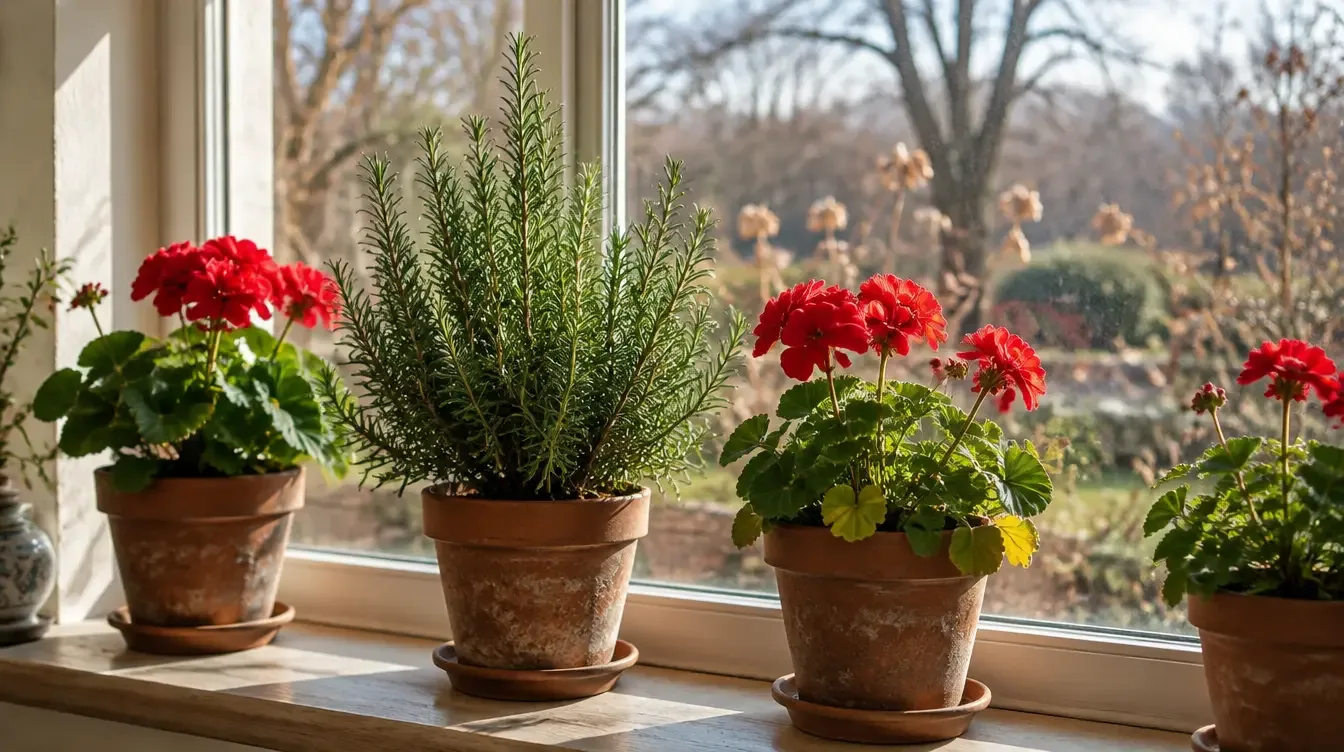
Right now the geraniums on the steps look as good as they have all year. The rosemary by the back door is a small shrub. Somewhere there is a fig in a pot, or a fuchsia, or a scented pelargonium that came from a cutting of a cutting and cannot be bought anywhere. The forecast has a night in the thirties on it, and the question is what you are willing to carry indoors.
Some of it is not worth the trouble. A six-pack of zonal geraniums costs less than the potting mix you would use to keep them. But the ones that matter — the old variety, the plant from a friend's garden, the rosemary that took three years to get that size — can be carried through winter with less fuss than the internet suggests, if you pick the right method for the plant and the space you have.
This is when to bring things in, how to do it without importing a whitefly colony, and the three ways to keep a geranium.
When to bring things in
The rule is before frost, not after. A geranium that has been nipped once will usually recover; one that has been frozen hard is gone. The practical trigger is nights settling below 50°F, which for most of the United States means late September through October. Tender things go first: geraniums, begonias, coleus, fuchsia, brugmansia, anything with soft stems. Rosemary can wait. It shrugs off a light frost and a few nights in the twenties, so it is often the last pot to come in, sometimes not until November.
Check for pests first
Everything that comes indoors brings its passengers, and a warm windowsill with no ladybugs is the best thing that ever happened to an aphid. Spend ten minutes on each plant outside before it crosses the threshold.
- Hose the foliage down, top and underside, with a firm spray. This alone removes most aphids and spider mites.
- Look under the leaves and along the stems for whitefly, scale, and mealybugs. A soft brush or a cloth with a little insecticidal soap deals with what you find.
- Submerge the pot in a bucket of water for fifteen minutes. Ants, earwigs, slugs, and earthworms come out of the drainage holes; the worms can go back in the garden.
- Cut off anything yellow, dead, or spotted; less foliage is easier to keep alive in low light.
- Keep new arrivals apart from your houseplants for two weeks. Most problems show in that time, while they are still one plant's problem.
Three ways to keep a geranium
What gardeners call geraniums are pelargoniums, and they are tougher than their soft stems suggest. Which method you choose depends on how much window you have.
- As a houseplant. Cut the plant back by a third to a half, pot it up if it is in a hanging basket, and put it in your brightest window — south-facing if you have one. Water only when the top inch of soil is dry, and do not feed it until February. It will get leggy and drop leaves; that is normal, not failure. A plant that merely survives until March is a success, and it can be cut back hard then to start again.
- As cuttings. This is the method for a small house and a large plant. Take 3- to 4-inch tips from healthy stems, strip the lower leaves and any flower buds, and push them into moist seed-starting mix or perlite. They root in three to four weeks in a bright spot out of direct sun; rooting hormone helps but is not required. Six cuttings on a windowsill take up less room than one parent and give you six plants in spring.
- Bare-root and dormant. The old method, and the one for people with a cool, dark basement or garage that stays between 45 and 50°F. Dig the plant, knock most of the soil off the roots, cut the stems back to 6 or 8 inches, and hang it upside down from a rafter or lay it in an open cardboard box or paper bag. Once a month, soak the roots in water for an hour or two and let them drain. In early March, pot the survivors up, cut them back to green wood, and set them in a bright window. Expect to lose a third; the rest are the variety you could not buy again.
Rosemary indoors
Rosemary kills more good intentions than any other overwintered plant, and it does it two ways: by drying out completely, and by sitting wet. It hates both. The root ball must never go bone dry — water when the top inch is dry, then let it drain and empty the saucer — but it will rot in a pot that stays soggy.
Give it the brightest window you have and the coolest room you can stand, ideally one that stays in the 50s or low 60s. The combination of a warm living room, dry furnace air, and a dim corner is what turns a rosemary brown by January. Watch the leaf tips for a gray dusting of powdery mildew, which thrives in still indoor air; a small fan nearby and a little space between plants prevent most of it.
Where winter lows rarely drop below the low twenties, rosemary is better left outside in the ground or against a wall than brought into a house it will not like. An unheated garage with a window is a fine middle ground in colder places: close to freezing, bright, and watered every two weeks.
Figs, bay, and other woody things in pots
A fig in a pot does not want to be a houseplant. It wants to go dormant. Leave it out until the first frosts have dropped its leaves, then move it into an unheated garage, shed, or basement that stays between about 30 and 50°F. Dark is fine; dormant, it needs no light. Water it lightly once a month so the roots do not desiccate, and bring it back out after your last frost, when it will leaf out within two weeks. Brugmansia and hardy fuchsia can be treated the same way, cut back by half first. Bay laurel is the exception: it stays evergreen and goes in a cool bright room, treated like rosemary.
What people get wrong
Too much water. Every plant indoors in winter is growing slowly or not at all, and the pot that needed watering daily in August needs it weekly or less now. Too little light is the next failing, and the two together produce a soft, pale plant that rots at the base. Fertilizing before spring makes it worse. And many gardeners give up on a plant that looks shabby in January, when shabby was always the plan.
What to write down
Two things. The date each plant came in and the method you used for it — windowsill, cuttings, or dormant in the garage. Next October you will not remember which rosemary sat in the north bedroom and which in the garage, and only one of them will be alive to tell you. A photo of each plant on the day it comes in, with the variety name attached, is the whole entry. In spring, note what came through. After two winters you will know which method your house is good at.
Bringing the tender plants in is one line on the fall checklist, and the record of what you did is the kind of note a garden journal exists for. GardenBinder is free to start, and a photo with a date and a variety name is the whole entry.
#overwintering #geraniums #rosemary #tender-plants #frost