Soil & Compost
What to Do With Fall Leaves: Mulch, Leaf Mold, Compost, or Leave Them
Mea Cara · November 3, 2026 · 7 min read
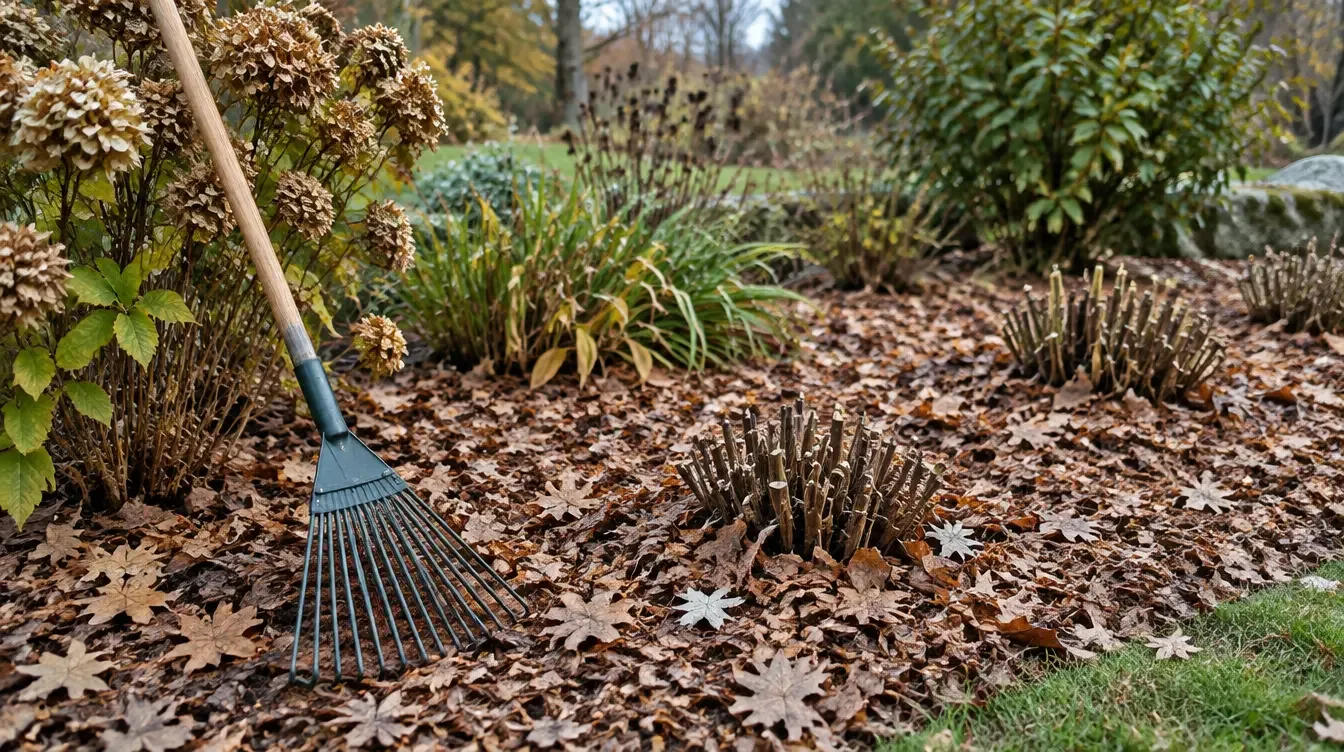
The leaves have come down in one week, the way they do, and the lawn has disappeared under them. The usual answer is a rake, a dozen paper bags, and a trip to the curb. That is also the answer that sends the best free soil improver you will see all year to a municipal pile, and then charges you for bagged mulch in May.
Leaves are what a woodland floor is made of. Shredded, they are a mulch as good as anything you can buy. Piled and left, they turn into leaf mold, which is the stuff old gardeners mean when they say a soil is "in good heart". And a bed left under its own leaves is where a surprising number of next year's butterflies, bees, and ladybugs are spending the winter. The only place leaves do real harm is the lawn.
So the question is not whether to keep them but which of four jobs to give them, and a leaf pile big enough usually does all four.
Mulch the beds with them
This is the fastest use and the one that pays back first. Shredded leaves spread 2 to 3 inches deep over perennial beds, around shrubs, and over empty vegetable beds hold moisture, keep the soil from heaving in freeze-thaw winters, smother the weeds that germinate in a mild spell, and feed the earthworms all winter. By late spring most of it has gone into the soil.
Shredding matters. Whole leaves, especially big flat ones like maple and sycamore, mat into a wet layer that sheds water and smothers crowns. Run the mower over them on the lawn, with the bag on if it has one, or without it and rake up the confetti. A leaf blower set to vacuum does the same job. Keep the mulch an inch or two back from the stems of shrubs and the crowns of perennials, and go a little deeper, 4 to 6 inches of loose shredded leaves, over the garlic bed and over anything tender you are trying to carry through.
Make leaf mold
Leaf mold is nothing but leaves, left to rot on their own. Fungi do the work rather than the bacteria that drive a hot compost heap, so it is slow, cold, and asks for nothing: no turning, no greens, no ratio. What you get, in one to two years, is a dark, crumbly, sweet-smelling material that holds several times its weight in water. It has little in the way of nutrients, which is the point; it is a soil conditioner, the thing you dig into clay to open it and into sand to make it hold on to water, and the best seed-starting ingredient you can make yourself.
- Make a bin from a cylinder of wire fencing about 3 feet across and 3 feet high, in a corner that gets some shade. Four stakes and chicken wire is enough.
- Fill it with leaves, wetting each layer as you go. Dry leaves do not rot; the pile should be as damp as a wrung-out sponge all the way through.
- Shred first if you can. Shredded leaves make leaf mold in about a year; whole leaves take closer to two.
- Leave it. Top it up as it sinks, water it in a dry summer, and otherwise forget it. Black plastic bags of damp leaves with a few holes punched in them do the same thing in a smaller space.
Start a new bin every fall and you will have a finished one to empty every fall after the first.
Feed the compost
A compost heap in fall has the opposite problem to a compost heap in July. Now it is all browns and no greens; in July it is all grass clippings and kitchen scraps and no browns, and it goes slimy. Leaves fix both. Mix shredded leaves into the heap now, in roughly equal volume with the green material, and then put a few bags of dry leaves aside somewhere under cover. In summer, a handful of those with every bucket of kitchen scraps keeps the heap sweet and working. Dry leaves stored for this are the most useful thing in the shed by August.
Leave them where they fall
In the beds, under shrubs and hedges, and in any wild corner, the lowest-effort option is also a good one. Fallen leaves are where many moths and butterflies pupate, where queen bumblebees and ladybugs overwinter, and where fireflies spend their larval years. A bed cleared to bare soil in November is a bed that has evicted them. Leaving the leaves is ordinary good practice in a woodland garden and reasonable anywhere you can live with the look until spring. Rake them off tender crowns and seedlings in March or April, once nights are reliably above 50°F and the sleepers have left.
The lawn is the exception. A thick mat of leaves on grass through winter smothers it, and you will find yellow, dead patches in spring. Mow the leaves into the turf instead, in two or three passes if they are deep, until the pieces are small enough to fall between the grass blades. Up to an inch or so of shredded leaves worked into a lawn this way feeds it; more than that, rake up and use elsewhere.
Which leaves to send away
A few leaves should go to the curb or the municipal compost, not into your beds.
- Black walnut, butternut, and hickory. Walnut leaves and nuts carry juglone, which stunts tomatoes, peppers, potatoes, and many other plants. It breaks down with time, but not reliably in a cold leaf pile, so keep them out of anything that will touch the vegetable garden.
- Diseased leaves. Apple and crabapple leaves with scab, rose leaves with black spot, and anything that was obviously sick this year carry the spores through winter on the fallen leaf. A home compost heap rarely gets hot enough to kill them. Rake these up thoroughly from under the plant they fell from and send them away.
- Leaves that are slow to rot are not a problem, just slow. Oak, beech, and sweetgum take longer and make a good, long-lasting mulch; shredding helps. Pine needles are fine as mulch and do not meaningfully acidify the soil beneath them.
What people get wrong
Whole leaves piled a foot deep on a perennial bed, which rots the crowns of anything that dislikes wet, and then "leaves killed my plants" for the rest of the gardener's life. Dry leaves in the leaf-mold bin, which sit unchanged for three years. Leaves raked off the beds in fall and bought back as bagged mulch in spring. And the lawn left under a mat until March. Shred, wet, and keep them off the grass, and the rest takes care of itself.
What to write down
Two things. Which beds got leaf mulch and roughly how deep, because next spring you will want to know why one bed came through the winter cleaner than another and whether the garlic under 6 inches did better than the garlic under 3. And the date you started the leaf-mold bin, with a photo, so that when you are wondering next October whether it is ready you can see that it has been a full year. A note of where the diseased leaves came from is worth having too; it is a reminder to look at that apple early next summer.
Clearing the leaves comes just after planting the garlic on the fall checklist, and the garlic bed is the first place the shredded ones should go. GardenBinder is free to start, and a photo of the mulched bed with the date is the whole entry.
#fall-leaves #mulch #leaf-mold #compost #soil